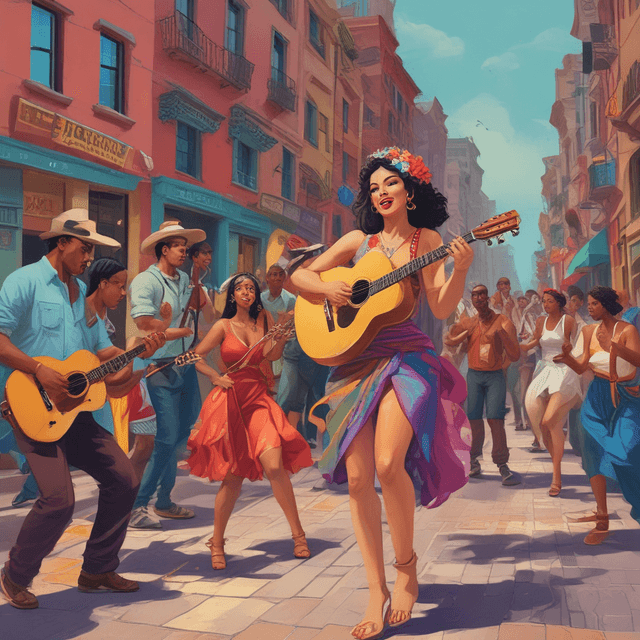
| Genres | Cumbia • Ranchera • Samba • Latin rock • Latin hip hop |
| Spread | North American musical forms like rock and hip hop have gained following |
| Influences | Iberian • Indigenous • African |
| Prominence | Remain backbone of mainstream popular music in Latin America |
| Coexistence | Alongside classical and folk music traditions |
| Historical Development | Forged during Spanish colonial era through cultural exchange |
Latin American popular music encompasses a rich and diverse array of musical styles, rhythms and traditions that have developed over centuries across the region. Shaped by the long legacy of Spanish colonial rule as well as the confluence of Iberian, indigenous, and African cultural influences, Latin America's popular music forms a vibrant and ever-evolving soundscape.
The origins of Latin American popular music can be traced back to the 16th century Spanish conquest and subsequent colonization of the region. Iberian musical forms like the flamenco guitar and Andalusian cadence intermingled with the indigenous musical traditions of the Aztec, Inca, and other Mesoamerican civilizations. Rhythms and instrumentation from West African enslaved peoples also became deeply interwoven into the emerging Latin American musical fabric.
This centuries-long process of cultural cross-pollination and syncretism gave rise to many of the signature genres that would come to define Latin American popular music. Cumbia emerged from the Caribbean coast of Colombia as a fusion of African-derived rhythms, European-influenced melodic structures, and indigenous instrumentation. Meanwhile, the driving Mariachi sound of Mexico blended Spanish paso doble and Mexican folk music.
By the late 19th and early 20th centuries, several distinct regional popular music styles had become widely popular and influential across Latin America. These included:
Samba - A lively, rhythmic genre originating in the favelas of Rio de Janeiro, Brazil that combines African-Brazilian percussion with European-influenced melodies.
Ranchera - A Mexican folk music style featuring mariachi instrumentation and lyrics celebrating rural life, nationalism, and romantic themes.
Bolero - A slow, romantic ballad form popular throughout Central America and the Caribbean that combines European classical and African-derived elements.
Nueva canción - A politically-charged "new song" movement that emerged across South America in the 1960s-70s, fusing traditional folk styles with contemporary protest themes.
These and other regional genres like Salsa, Merengue, and Tango remained the foundation of mainstream Latin American popular music well into the late 20th century, enjoying widespread commercial success both at home and abroad.
While the aforementioned dance-oriented, rhythmic styles dominated the Latin American popular music landscape, the region also maintained a rich tradition of classical and avant-garde musical experimentation. Composers like Heitor Villa-Lobos of Brazil, Silvestre Revueltas of Mexico, and Astor Piazzolla of Argentina drew on both European art music and indigenous folk forms to create innovative, boundary-pushing works.
This "high art" lineage within Latin American music has remained deeply intertwined with the popular traditions, with many composers actively incorporating folk elements and instrumentation into their classical compositions. Likewise, leading pop and folk artists have frequently collaborated with or been influenced by contemporary classical and experimental composers.
In the latter half of the 20th century, the rise of rock and roll, hip hop, and other North American musical genres began to exert a growing influence on Latin American popular music. Grupos like Los Jaivas of Chile and Maná of Mexico incorporated Anglo-American rock sounds while maintaining their Latin musical foundations. Meanwhile, Hip hop and Rap scenes emerged across major cities, sparking debates around the "authenticity" of this U.S. import.
However, the enduring dominance of traditional Latin American styles like Cumbia, Ranchera, and Samba has meant that North American genres have generally been absorbed and reimagined through a distinctly regional lens, rather than fully supplanting existing popular music forms. The dynamic interaction and cross-pollination between these international and local influences continues to shape the ever-evolving soundscape of Latin America.
